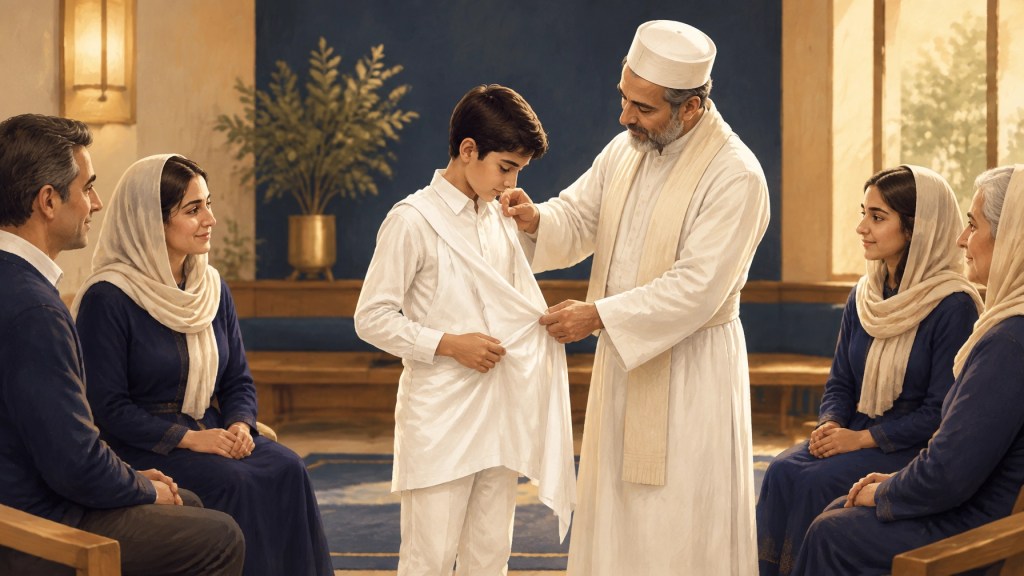
Welcome. Learn what Navjote means, how the ceremony works, and how families can prepare.
What is Navjote?
Navjote is a Zoroastrian initiation ceremony. During it, an initiate formally embraces the faith and receives the sudreh, a sacred shirt, and kusti, a sacred cord. The initiate then wears them as part of daily religious practice.
Sedreh-Pushi—also written Sudreh-Pushi and called سدرهپوشی in Persian—refers to putting on the sudreh. Navjote is the name commonly used among Parsis. Names and spellings vary across communities.
Navjote is not a baptism. It is a commitment to a religious path and its responsibilities. Many Zoroastrians connect those responsibilities with good thoughts, good words, and good deeds.

At what age does it happen?
There is no single age followed by every Zoroastrian community. Many families arrange the ceremony when a child is between 7 and 15, once they can understand the commitment and take part. The Harvard Pluralism Project describes different customary age ranges among Parsi and Iranian communities.
Some people have Navjote as adults. Practices around adult initiation and accepting newcomers vary, so speak with a Zoroastrian priest and community before making plans. Let the initiate ask questions and take part willingly. Avoid treating age alone as proof of readiness.
What happens during the ceremony?
The order and prayers can differ. A priest, often called a mobed, guides the initiate and family through the local tradition. A typical ceremony may include these steps:
- Prepare for the rite. The family arranges the sudreh and kusti and confirms the prayers, language, timing, and any customary preparation with the priest. Some traditions include a ritual purification before the main ceremony.
- Put on the sudreh. The initiate holds or wears the white shirt while prayers are recited. The priest guides the initiate through a declaration of faith, often called the Din no Kalmo.
- Tie the kusti. The initiate wraps the cord around the waist and ties it while reciting prayers. The priest shows the correct practice.
- Affirm the commitment. The initiate recites prayers or a statement of faith. The ceremony often closes with blessings.
Use this as a guide, not a fixed script. Ask the officiating priest which steps and prayers are customary for your family.
What do the sudreh and kusti mean?
The sudreh is a white undershirt. Its color is commonly associated with purity. A small pocket on the front is often explained as a reminder to fill life with good deeds. These meanings are part of Zoroastrian teaching and interpretation; explanations may vary.
The kusti is a sacred cord worn around the waist over the sudreh. The wearer unties and reties it during daily prayers. Its three turns are commonly connected with good thoughts, good words, and good deeds. For a deeper look at the cord’s history and symbolism, see Encyclopaedia Iranica’s entry on the kustīg.
What roles do the priest and family have?
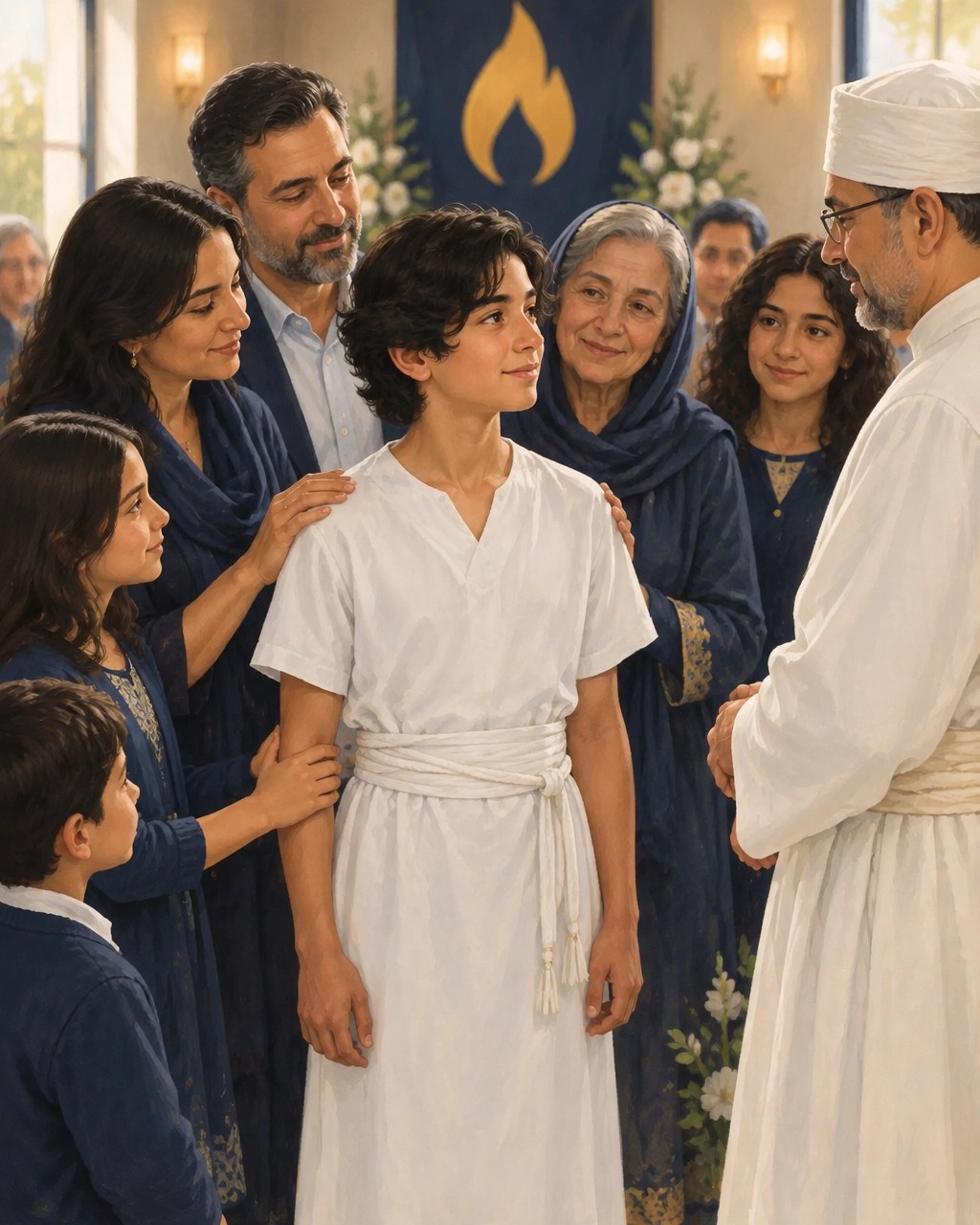
The priest leads the prayers and explains the ritual actions. Ask the priest beforehand what the initiate should learn, what clothing to bring, and how long the ceremony will take.
Family members help the initiate prepare and offer support. They may host a gathering afterward, but the celebration is not the ceremony’s central purpose. Include relatives and guests in ways that respect the initiate’s wishes and community customs.
If you are a non-Zoroastrian partner or guest, ask the family where to sit, when to stand, and whether photography is appropriate. Follow the priest’s guidance. Participate respectfully without feeling you must recite prayers.
Do Fasli, Shenshai, and Kadmi communities perform it differently?
These names refer to Zoroastrian calendar traditions, not different faiths. Shenshai and Kadmi calendars calculate religious dates differently. Fasli keeps the New Year aligned with the spring equinox. The calendar followed by a family can affect the date chosen for a ceremony, but it does not by itself determine the Navjote’s meaning.
Community and priestly practices may also vary. Confirm the details with the family’s priest rather than assuming one version applies everywhere. For background, read Encyclopaedia Iranica’s overview of modern Zoroastrian calendars.

How can a family prepare?
- Contact a priest. Ask about timing, preparation, prayers, and clothing.
- Talk with the initiate. Explain the ceremony and invite questions.
- Check community customs. Confirm the calendar date and local expectations.
- Plan access. Arrange language support, seating, and guest guidance if needed.
- Respect privacy. Ask before sharing photos or personal details.
For more Zoroastrian learning, explore Zoroastrian Light’s teachings and learning journey. Continue with a priest or community for guidance specific to your tradition.
ترجمه فارسی
نوجوت: آیین زرتشتیای که در آن کودک، دین خود را برمیگزیند
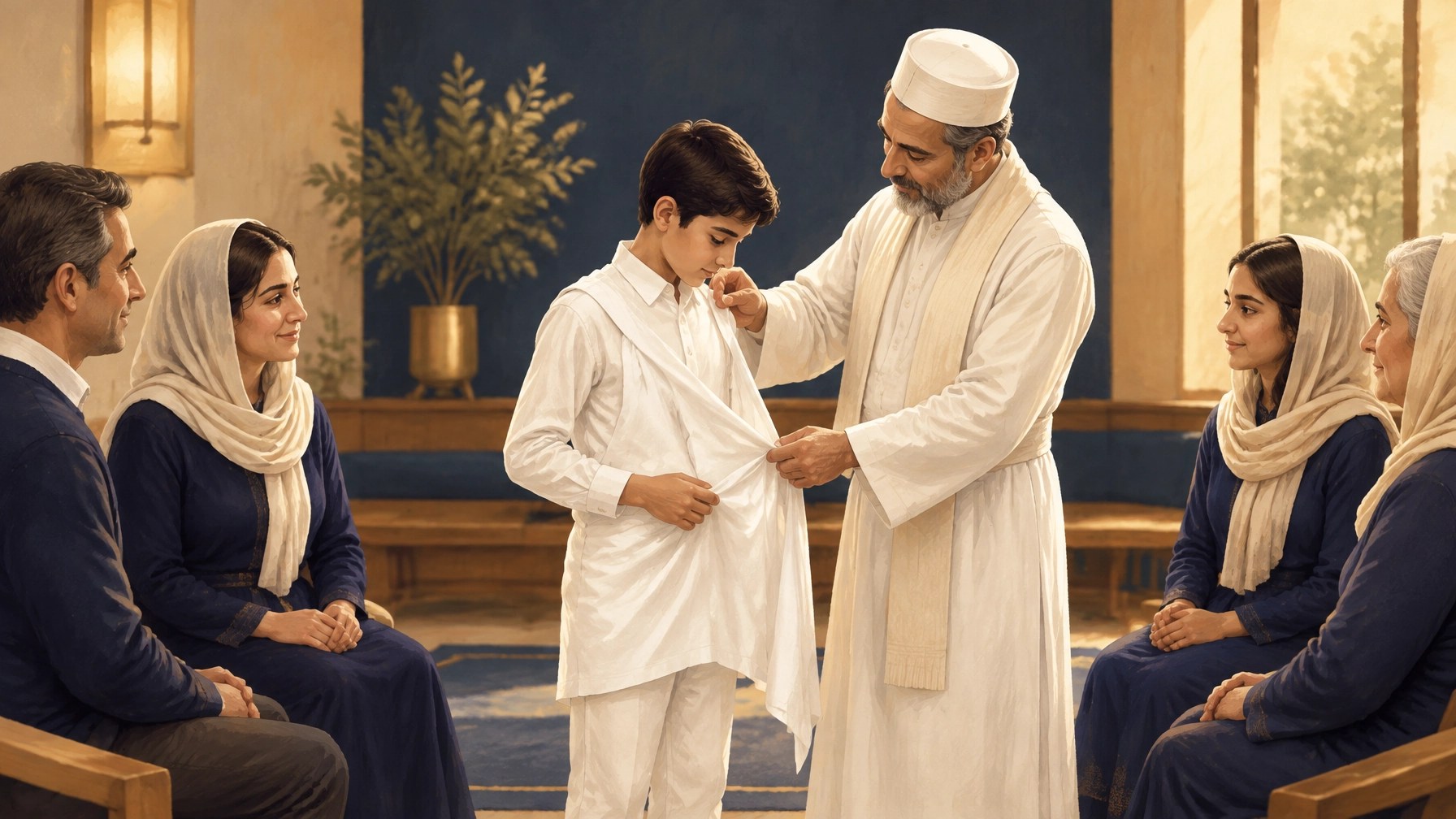
خوش آمدید. با معنای نوجوت، مراحل آیین و راههای آمادگی خانواده آشنا شوید.
نوجوت چیست؟
نوجوت آیین ورود رسمی به دین زرتشتی است. در این آیین، فرد باور زرتشتی را میپذیرد و سدره، پیراهن سپند، و کُشتی، بند سپند، را دریافت میکند. پس از آن، این دو را در زندگی روزمره دینی خود میپوشد.
سدرهپوشی به پوشیدن سدره اشاره دارد. نام نوجوت بیشتر میان پارسیان رایج است. نامها و شیوههای نوشتن آنها در جامعههای گوناگون تفاوت دارد.
نوجوت غسل تعمید نیست. این آیین، پذیرفتن یک مسیر دینی و مسئولیتهای آن است. بسیاری از زرتشتیان این مسئولیتها را با پندار نیک، گفتار نیک و کردار نیک پیوند میدهند.
این آیین در چه سنی برگزار میشود؟
همه جامعههای زرتشتی از یک سن مشخص پیروی نمیکنند. بسیاری از خانوادهها زمانی این آیین را برگزار میکنند که کودک بین ۷ تا ۱۵ سال داشته باشد و بتواند معنای این تعهد را درک کند و در آیین مشارکت داشته باشد. پروژه پلورالیسم دانشگاه هاروارد به تفاوت سنهای معمول میان جامعههای پارسی و ایرانی اشاره میکند.
برخی افراد در بزرگسالی نوجوت میگیرند. شیوههای مربوط به نوجوت بزرگسالان و پذیرفتن تازهواردان در همه جامعهها یکسان نیست. پیش از برنامهریزی، با موبد و جامعه زرتشتی محل مشورت کنید. به فرد فرصت دهید پرسشهایش را مطرح کند و با خواست خود در آیین شرکت کند. تنها سن را نشانه آمادگی ندانید.
در آیین چه اتفاقی میافتد؟
ترتیب مراسم و نیایشها میتواند متفاوت باشد. موبد، فرد و خانواده را در اجرای شیوه رایج در جامعه خود راهنمایی میکند. یک مراسم معمول ممکن است این مراحل را داشته باشد:
۱. برای آیین آماده شوید. خانواده سدره و کُشتی را آماده میکند و درباره نیایشها، زبان، زمانبندی و آمادگیهای مرسوم با موبد هماهنگ میشود. در برخی سنتها، پیش از مراسم اصلی، آیین پاکیزگی برگزار میشود.
۲. سدره را بپوشید. فرد هنگام خواندن نیایشها سدره را در دست میگیرد یا میپوشد. موبد او را در بیان باور دینی، که اغلب دین نو کلمو نامیده میشود، راهنمایی میکند.
۳. کُشتی را ببندید. فرد کُشتی را به دور کمر میپیچد و هنگام خواندن نیایشها گره میزند. موبد شیوه درست را نشان میدهد.
۴. پایبندی خود را اعلام کنید. فرد نیایشها یا بیان باور دینی را میخواند. مراسم معمولاً با نیایشهای پایانی و آرزوی برکت پایان مییابد.
این مراحل را راهنما بدانید، نه متنی ثابت برای همه. از موبد برگزارکننده بپرسید کدام مراحل و نیایشها در سنت خانواده شما رایج است.
سدره و کُشتی چه معنایی دارند؟
سدره زیرپیراهنی سفید است. رنگ سفید معمولاً با پاکی پیوند دارد. جیب کوچکی در جلوی آن اغلب یادآور این دانسته میشود که زندگی را با کردارهای نیک پُر کنیم. این معناها از آموزشها و تفسیرهای زرتشتی میآیند و ممکن است در توضیح آنها تفاوتهایی باشد.
کُشتی بندی سپند است که روی سدره و به دور کمر بسته میشود. فرد هنگام نیایشهای روزانه آن را باز میکند و دوباره میبندد. سه دور کُشتی را معمولاً با پندار نیک، گفتار نیک و کردار نیک پیوند میدهند. برای آشنایی بیشتر با تاریخ و نمادهای کُشتی، نوشته دانشنامه ایرانیکا درباره کُستیگ را بخوانید.
موبد و خانواده چه نقشی دارند؟
موبد نیایشها را راهبری میکند و شیوه انجام آیین را توضیح میدهد. پیش از مراسم بپرسید فرد چه چیزهایی باید بیاموزد، چه لباسی باید بیاورد و مراسم چه مدتی طول میکشد.
اعضای خانواده به فرد کمک میکنند آماده شود و از او پشتیبانی میکنند. ممکن است خانواده پس از مراسم گردهمایی برگزار کند، اما جشن هدف اصلی آیین نیست. بستگان و مهمانان را به شکلی همراه کنید که خواستههای فرد و رسمهای جامعه را محترم بشمارد.
اگر همسر یا مهمان غیرزرتشتی هستید، از خانواده بپرسید کجا بنشینید، چه زمانی بایستید و آیا عکاسی مناسب است. از راهنمایی موبد پیروی کنید. با احترام همراهی کنید؛ لازم نیست نیایشها را بخوانید.
جامعههای فَصلی، شهنشاهی و قَدیمی چه تفاوتی دارند؟
این نامها به گاهشماریهای زرتشتی اشاره دارند، نه به دینهای متفاوت. گاهشماری شهنشاهی و قدیمی تاریخهای دینی را به شیوههای متفاوت محاسبه میکنند. گاهشماری فصلی سال نو را با اعتدال بهاری هماهنگ نگه میدارد. گاهشماری خانواده میتواند بر تاریخ برگزاری آیین اثر بگذارد، اما بهتنهایی معنای نوجوت را تعیین نمیکند.
رسمهای جامعه و موبدان نیز ممکن است متفاوت باشد. بهجای آنکه یک شیوه را برای همه یکسان بدانید، جزئیات را از موبد خانواده بپرسید. برای آشنایی بیشتر، نگاهی به گاهشماریهای نوین زرتشتی در دانشنامه ایرانیکا بیندازید.
خانواده چگونه آماده شود؟
- با موبد تماس بگیرید. درباره زمان، آمادگیها، نیایشها و پوشاک بپرسید.
- با فرد گفتوگو کنید. آیین را توضیح دهید و به پرسشهایش پاسخ دهید.
- رسمهای جامعه را بررسی کنید. تاریخ گاهشماری و انتظارهای محلی را تأیید کنید.
- دسترسی را فراهم کنید. در صورت نیاز، برای زبان، نشستن و راهنمایی مهمانان برنامهریزی کنید.
- به حریم خصوصی احترام بگذارید. پیش از انتشار عکسها یا اطلاعات شخصی اجازه بگیرید.
برای آشنایی بیشتر با آموزههای زرتشتی، آموزهها و مسیر یادگیری در Zoroastrian Light را ببینید. برای راهنمایی متناسب با سنت خود، با موبد یا جامعه زرتشتیتان مشورت کنید.
Keep learning in the Zoroastrian Light app
Pray along with Avestan recitation, follow guided lessons on the Gathas, rituals and history, and start each day with a free daily prayer, in English, Farsi and Dari.
نیایش روزانه، آموزشها و گاتها را در اپلیکیشن Zoroastrian Light دنبال کنید.


Leave a Reply